The Legal Playbook Engine: Teaching AI Your Firm's DNA
Every law firm has institutional knowledge trapped in senior partner brains. The Playbook Engine codifies decades of expertise into executable AI rulesets.

The Knowledge Extraction Crisis
Every law firm has a knowledge problem. The most valuable asset in any firm is not its Westlaw subscription or its conference room. It is the accumulated judgment of its senior partners—decades of pattern recognition about which clauses to fight for, which risks to accept, which counterparties negotiate aggressively, and which regulatory changes actually matter.
This knowledge is almost entirely undocumented. It lives in the heads of partners who are approaching retirement, in the tribal memory of practice groups, and in the "that's just how we do things" conventions that no one has ever written down. When a senior partner retires, the firm doesn't just lose a revenue generator—it loses an irreplaceable knowledge base that took 30 years to build.
The legal industry's knowledge management efforts have been embarrassingly primitive. Most firms rely on precedent databases—searchable repositories of past work product. But a precedent database is like a dictionary without grammar rules. It tells you what words exist, but not how to construct a sentence. Knowing that the firm once negotiated a $2M liability cap doesn't tell you why that cap was appropriate for that deal, what the counterparty's opening position was, or what concessions were traded to achieve it.
The Playbook Engine
BasaltVigil's Playbook Engine solves this by transforming institutional knowledge from implicit wisdom into explicit, executable code.
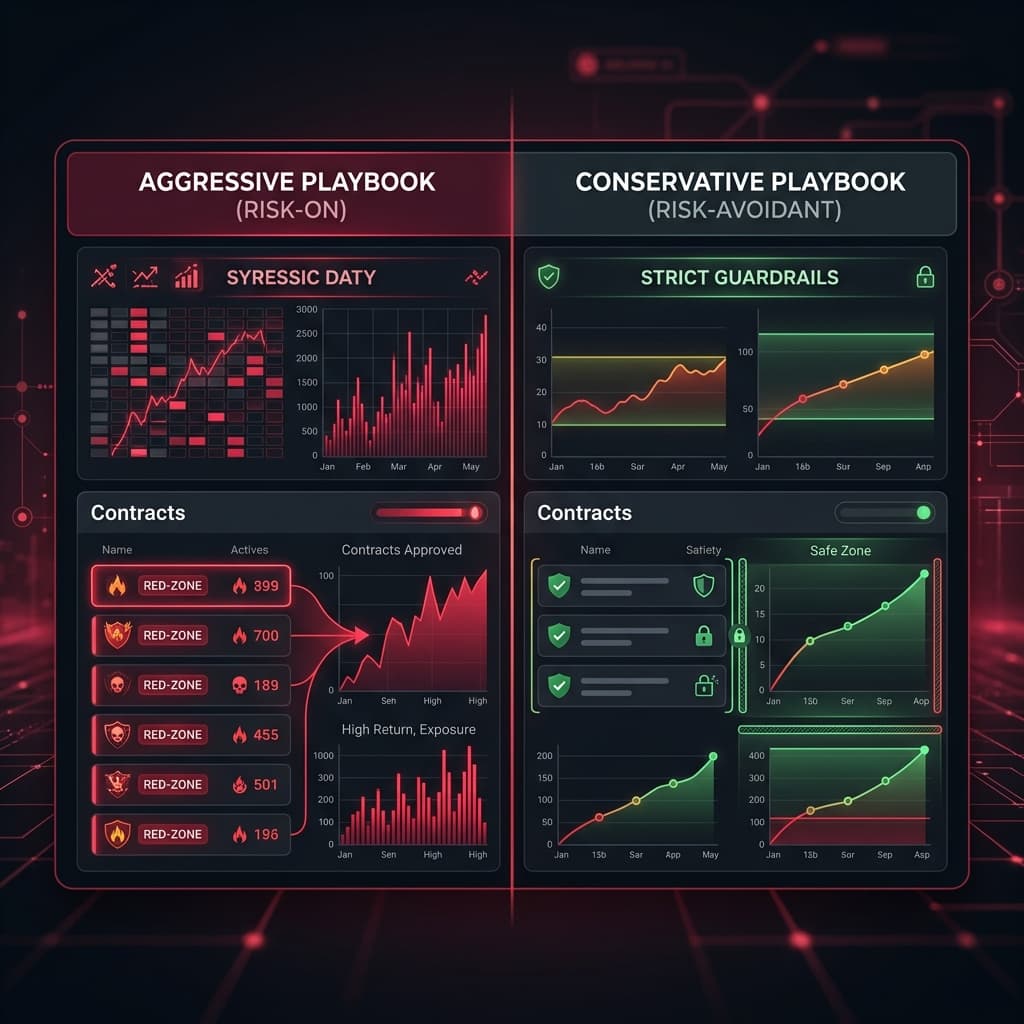
A playbook is not a template. It is a comprehensive rule engine that encodes your firm's negotiation philosophy, risk tolerance, regulatory interpretations, and strategic preferences into a structured format that Vigil's agents can execute autonomously.
Building a Playbook
The process begins with what we call a Knowledge Harvest. Vigil's ingestion agents analyze your firm's entire historical contract corpus—every MSA, NDA, licensing agreement, and vendor contract your firm has negotiated over the past decade. The system identifies patterns:
- What is your firm's actual standard position on limitation of liability? Not what the template says, but what you actually agreed to across 500 negotiations.
- When do you deviate from your standard position? What triggers a concession on indemnification caps?
- Which clause types generate the most redline cycles? Where do negotiations stall?
- What is the historical success rate of different negotiation strategies against different counterparty types?
This analysis produces a draft playbook that is then reviewed and refined by your senior partners. They don't need to write rules from scratch—they review AI-generated rules derived from their own historical behavior and confirm, modify, or override them.

Playbook Versioning
Playbooks are living documents. When a new regulation is passed, when a court decision changes the enforceability of a common clause type, or when your firm's risk appetite changes, the playbook is updated. Every version is immutably logged with a complete audit trail showing who changed what and why.
Vigil maintains separate playbooks for different practice areas, client types, and deal sizes. A $500M acquisition uses different risk parameters than a $10K SaaS subscription. A financial services client requires different regulatory compliance language than a manufacturing company. The Playbook Engine manages this complexity automatically, selecting the appropriate ruleset based on the document type, counterparty profile, and client classification.

The Competitive Moat
The Playbook Engine creates an extraordinary competitive moat. The longer you use Vigil, the smarter it gets. Every negotiation, every redline, every partner decision enriches the playbook with new data points. After two years of operation, your Vigil instance has absorbed more institutional knowledge than any single attorney could accumulate in a career.
This is not a feature. It is a flywheel. And firms that start building their playbooks first will have an insurmountable advantage over late adopters.
Related Dispatches

Legal RAG Architecture: Why Generic Search Fails in Law

The Autonomous Compliance Radar: Real-Time Regulatory Intelligence

Predictive Litigation Intelligence: Winning Before You File